10 Tips for Choosing a Modern Aluminum Entry Door

Time:2026-10-22 Author:Sophia
0%

Choosing a Modern Aluminum Entry Door is more than selecting a striking color or oversized glass panel. It affects security, comfort, energy use, and the first impression of your home. A well-designed aluminum door should feel solid when opened, close smoothly, and remain stable through changing temperatures. Its frame, thermal break, weather seals, hinges, lockset, and glass must work as one system.

Details matter.

This guide shares ten practical tips for evaluating materials, dimensions, insulation, glazing, hardware, finishes, and installation quality. Measure the opening carefully, including wall depth and threshold conditions. Ask manufacturers for tested performance data, warranty terms, maintenance instructions, and installation requirements. Look for corrosion-resistant finishes and properly sealed joints, especially in coastal or rainy areas. Security should include a strong frame, dependable multipoint hardware, and impact-resistant options where appropriate.

A beautiful door can still be a poor choice.

I have seen homeowners focus on a matte black finish, then overlook cold drafts around the threshold. Others select narrow glass without checking privacy or afternoon glare. These mistakes are understandable, but they can become expensive after installation. Professional guidance helps connect design preferences with climate, daily use, and building requirements. The best decision may not be the most dramatic one. It may be the quieter door that seals tightly, opens easily, and keeps performing years later. This introduction will help you question attractive claims, compare practical features, and choose with greater confidence.
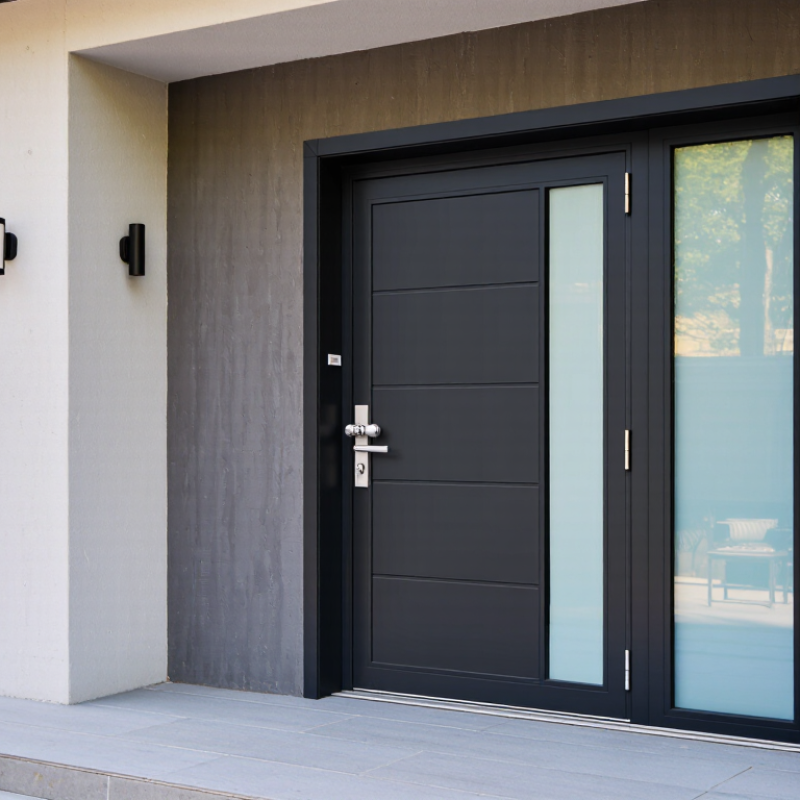
10 Tips for Choosing a Modern Aluminum Entry Door

Measure Opening Geometry and Confirm a 32-Inch Minimum Clear Passage

Measure the opening before choosing a modern aluminum entry door. A door slab’s advertised width is not the clear passage width. Hinges, seals, locks, and the frame reduce usable space.

For a 32-inch minimum clear passage, the opening may need a wider leaf than expected. Confirm this with the door schedule and installation drawings.

Measure width at the top, center, and bottom of the opening. Record height at both jambs and the center. Check whether the sill is level and whether each jamb is plumb. Diagonal measurements can reveal a racked frame.

Small differences matter. I have seen a 36-inch opening lose clearance because the frame leaned inward by less than an inch.

Inspect the rough opening, finished floor, threshold, and wall depth together. New flooring can raise the threshold and change the swing clearance. Measure from the finished surface, not bare subfloor.

Also check nearby walls, handrails, and furniture that could restrict the door’s movement. Leave space for weather seals and adjustment shims. Do not assume an old frame is square.

Write every measurement down, including the smallest width. Photographs of corners and the sill can help an installer identify hidden problems.

If the opening is uneven, correcting it may be safer than forcing the door into place. That costs more sometimes.

Still, a door that opens smoothly and preserves a genuine 32-inch clear passage is worth the extra verification. Local accessibility requirements may differ, so confirm the final configuration with a qualified professional.

Specify Thermal Breaks and Compare NFRC U-Factors Near 0.27

Choosing a modern aluminum entry door starts with its thermal break, not its finish. A properly designed break separates the exterior and interior aluminum frames with a low-conductivity material. This reduces heat transfer through the frame. Ask whether the break is continuous around the jamb, head, and threshold. Small gaps can create cold spots.

Compare NFRC-rated whole-door U-factors, not glass-only numbers. A result near 0.27 indicates strong insulating performance, but it is not magic. Check the label’s climate assumptions and product configuration. A large glass panel, metal threshold, or sidelights can change the final rating. Request air-leakage, condensation-resistance, and solar-heat data when available. These figures reveal more than a showroom sample.

Inspect the door’s frame depth, weather seals, corner joints, and adjustable threshold. Look for two compression seals that remain flexible in cold weather. Confirm that the installer will insulate around the rough opening, seal the sill, and keep the frame square. Installation matters greatly. I have seen excellent doors perform poorly because expanding foam blocked drainage paths. That mistake is easy to overlook. Measure the opening carefully, review the warranty terms, and keep the NFRC documentation with your project records. A slightly lower U-factor may not justify a weaker threshold or difficult repair access. Performance should fit the entire entry system, not one impressive number.

Check NAFS Air, Water, and Structural Ratings, Including 0.3 cfm/ft²

Choosing a modern aluminum entry door involves more than appearance, hardware, and glass. Check its NAFS performance ratings before comparing finishes. These ratings show how the door handles air leakage, water penetration, and structural pressure.

Tip: Look for an air leakage result of 0.3 cfm/ft² or lower, tested under the stated NAFS conditions. Lower leakage can reduce drafts around the frame. Ask for the complete test report, not only a sales-sheet claim. I once trusted a headline rating and missed the tested door size. That mistake matters because performance can change with configuration.

Tip: Review the water rating carefully. A door may resist water during laboratory testing but still leak after poor installation. Check the pressure level, drainage design, sill details, and required flashing. On a rainy day, water often finds small gaps near the threshold first.

Tip: Structural ratings indicate how well the assembly withstands wind pressure and repeated loading. Match the rating to your local exposure, building height, and opening size. A strong door is not automatically a well-sealed door. Confirm air, water, and structural results separately. Installation quality deserves equal attention; an uneven sill or compressed weather seal can undermine excellent factory testing. If the documentation feels incomplete, pause and ask a qualified installer or building professional for clarification.

Choose AAMA 2603, 2604, or 2605 Finishes for Corrosion Resistance

10 Tips for Choosing a Modern Aluminum Entry Door

A durable aluminum entry door begins with its finish. AAMA 2603, 2604, and 2605 describe different performance levels for organic coatings on aluminum. They are not interchangeable labels. AAMA 2603 usually suits sheltered entrances with limited sun and moisture. AAMA 2604 offers stronger resistance to weathering, fading, and corrosion. AAMA 2605 provides the highest expected performance for demanding exposure, including intense sunlight and coastal air.

Location matters greatly. A door under a deep porch may not need the same coating as one facing afternoon sun and wind-driven rain. Near saltwater, inspect the frame, fasteners, and drainage paths carefully. The coating cannot protect water trapped inside an improperly assembled door. Check that the supplier identifies the AAMA level, coating type, pretreatment process, and testing documentation. A vague phrase like “weather resistant” tells you very little.

Color also affects service life. Dark finishes can absorb more heat and may show surface changes sooner. Ask whether the selected color has tested performance for the intended exposure. Clean the door with mild soap and fresh water, not abrasive pads or harsh solvents. Small scratches deserve attention before moisture reaches exposed metal.

I have seen attractive finishes fail early because installation details were ignored. The standard is important, but it is not magic. Even the best rating needs correct fabrication, sealing, drainage, and sensible maintenance.

Verify Security Hardware, Low-E Glazing, and Warranty Terms Before Ordering

A modern aluminum entry door should look refined, but its hidden components deserve closer attention. In installation work, I have seen beautiful doors fail because the lock body was too weak or the strike plate used short screws. Check for a strong deadbolt, reinforced hinges, a durable cylinder, and secure fasteners. Ask whether the hardware has been tested as a complete door system, not separately.

Security hardware tip: request clear specifications before ordering. Confirm the number of locking points and the material around the latch.

Low-E glazing tip: review the glass label, U-factor, and solar heat gain information. Low-E glass can reduce heat transfer, but the best performance depends on climate, orientation, and frame design. A bright west-facing entrance may need different glazing from a shaded doorway.

Warranty terms often reveal how dependable the supplier is. Read coverage for the aluminum finish, glass seal, hardware, and installation. Check exclusions, maintenance duties, claim procedures, and whether coverage transfers to a future owner. Keep every drawing and approval email. Small details matter. I sometimes focus too much on appearance, yet a narrow warranty can create expensive surprises later. Before signing, ask the installer to explain one realistic failure scenario and the exact remedy.

FAQS

What is a thermal break in an aluminum entry door?

It separates the exterior and interior aluminum frames with low-conductivity material. This reduces heat transfer and helps limit cold interior surfaces.

Should I compare glass U-factors or whole-door U-factors?

Compare the NFRC-rated whole-door U-factor. Glass-only figures can hide losses through the frame, threshold, and sidelights. A rating near 0.27 is strong, but configuration matters.

What parts should I inspect for thermal performance?

Check the frame depth, weather seals, corner joints, and adjustable threshold. Look for two flexible compression seals. Small gaps can create noticeable cold spots.

How important is professional installation?

Installation matters greatly. The installer should insulate the rough opening, seal the sill, and keep the frame square. Expanding foam must not block drainage paths.

Which performance data should I request?

Request whole-door U-factor, air leakage, condensation resistance, and solar-heat data. Keep the rating documents with your project records. A lower U-factor may not justify poor repair access.

What do coating classes 2603, 2604, and 2605 indicate?

They describe different durability levels for aluminum coatings. Class 2603 suits sheltered locations. Class 2604 offers stronger weather resistance. Class 2605 suits intense sun and coastal exposure.

Does the installation location affect the coating choice?

Yes. A covered entrance faces less sun and rain than an exposed doorway. Near saltwater, inspect fasteners, drainage paths, and hidden frame areas carefully. Water trapped inside can cause problems.

Can door color affect long-term durability?

Yes. Dark colors absorb more heat and may show surface changes sooner. Ask for tested performance in your climate. I might overvalue color, but exposure usually matters more.

How should I clean and maintain the finish?

Use mild soap and fresh water. Avoid abrasive pads and harsh solvents. Repair small scratches before moisture reaches exposed metal. Maintenance is simple, yet easy to neglect.

What should I confirm before ordering?

Measure the opening carefully and review the warranty terms. Confirm the coating level, pretreatment, seals, threshold, and drainage details. The standard helps, but it is not magic.

Conclusion

Choosing a Modern Aluminum Entry Door requires more than selecting an attractive style. Begin by measuring the opening carefully, checking its geometry, and confirming that the design provides at least a 32-inch clear passage. Review the frame’s thermal break system and compare NFRC U-factors, with values near 0.27 indicating strong thermal performance. It is also important to examine NAFS air, water, and structural ratings, including an air infiltration target of approximately 0.3 cfm/ft², to help ensure dependable performance in changing weather.

Finish quality and security should also guide the decision. Select an AAMA 2603, 2604, or 2605 coating according to the level of color retention and corrosion resistance required. Before ordering, verify the strength and function of the hardware, consider Low-E glazing for improved energy efficiency, and review the warranty for coverage, exclusions, and maintenance responsibilities. These checks can help you choose a durable, comfortable, and secure entry system suited to the building.

Sophia

Sophia

Sophia is a dedicated marketing professional with an exceptional depth of knowledge about her company's products and services. With a keen understanding of market trends and customer needs, she crafts insightful blog posts that not only inform but also engage readers, enriching the company’s online......