Choosing the best Aluminium Front Door is less about a glossy photograph and more about daily performance. It must welcome visitors, resist rain, and protect a warm hallway from winter draughts. A well-designed door should feel solid, close smoothly, and remain quiet after years of use.
Neil Ginger, a recognised leader in the aluminium door industry, once said, “The best entrance door is the one that performs reliably every day.” That practical view matters. Look beyond colour and handle style. Check the frame’s thermal break, glass specification, weather seals, threshold design, and locking system. These details affect comfort, security, and maintenance.
Measure carefully. A beautiful door can still disappoint when installation is rushed. Examine the manufacturer’s published U-value, testing information, warranty, and service arrangements. Ask who will install it and how the opening will be sealed. Small gaps around the frame can create noticeable cold spots near the floor.
Powder coating also deserves attention. A dark finish may look dramatic, but it can absorb intense sunlight and highlight surface marks. High-quality aluminium resists corrosion, yet it is not completely maintenance-free. Hinges need adjustment, seals can age, and drainage channels must remain clear.
There is no perfect choice. Budget, exposure, glazing area, and local weather change the answer. I may be overly cautious, but a front door should be judged by ten quiet winters, not one showroom visit. This guide explains how to compare materials, designs, performance ratings, and installers with greater confidence.
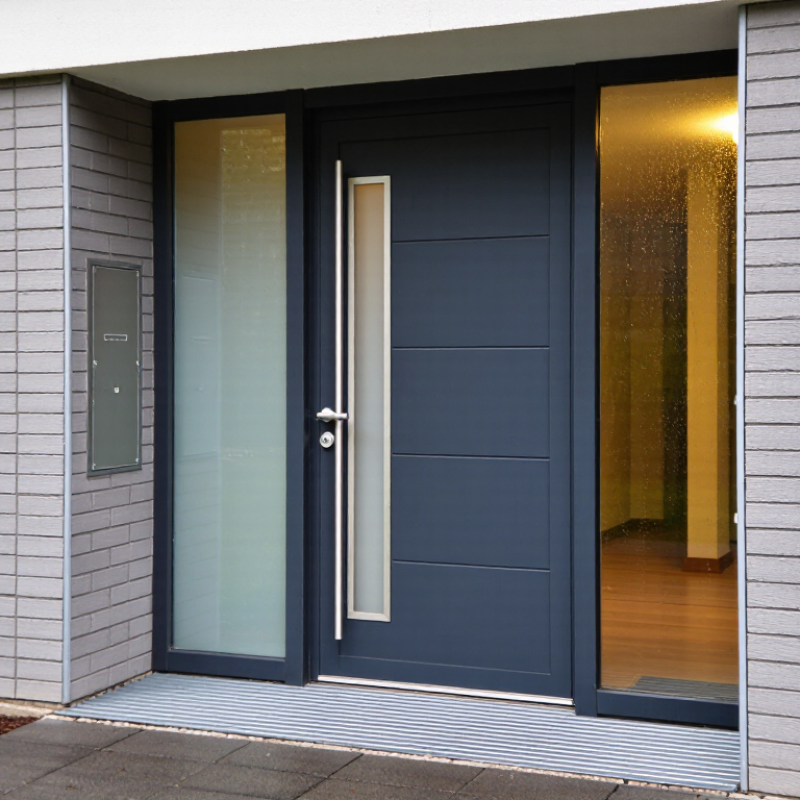
Define Your Aluminium Front Door Needs and Priorities
How to Choose the Best Aluminium Front Door?
Define Your Aluminium Front Door Needs and Priorities
Start with the entrance itself. Measure the opening, wall depth, threshold height, and available swing space. A busy hallway may need an inward-opening door with a slim handle. A shaded entrance may prioritise appearance over solar control. Do not choose security features before understanding daily use. That mistake is common.
Energy performance still matters. The International Energy Agency’s Buildings report states that buildings consume about 30% of global final energy. Your front door is only one part of the envelope, but poor seals can create a cold strip near the floor. Compare the declared U-value, air-permeability class, water-tightness rating, and thermal-break design. Lower U-values generally indicate better insulation. Ask for tested figures, not showroom promises. I would not automatically choose the thickest panel. It may add weight, cost, and installation difficulty without solving your main problem.
Tips:
Write your priorities in order: security, insulation, light, maintenance, or budget. Check the threshold after rainfall. Touch the inner frame on a cold morning. If the specification feels impressive but unclear, pause. The National Fenestration Rating Council explains that independent ratings help compare products consistently. Still, installation quality can weaken excellent factory performance. Require accurate measurements, drainage details, adjustment guidance, and a written warranty. Aluminium is durable, but finishes can still show scratches, dust, and coastal salt. Plan cleaning realistically. Perfect choices are rare. Reflect on what you will notice every day.
Compare Door Materials, Profiles, and Construction Quality
How to Choose the Best Aluminium Front Door?
Aluminium, timber, and uPVC each suit different entrance conditions. Aluminium resists warping, moisture, and daily impact, but it can feel cold without a thermal break. Timber offers natural warmth and strong repairability, yet it needs regular sealing. uPVC usually costs less, although colour stability and rigidity can vary. Compare whole-life performance, not only the purchase price.
The profile design matters more than appearance alone. Look for thermally separated sections, adequate wall thickness, and reinforced corners. A deeper profile may improve insulation and stiffness, but it can reduce the clear opening. Check the stated U-value, air leakage, water resistance, and wind-load results. Numbers should come from recognised testing, not vague sales language. Small details count. Effective drainage channels and sealed joints help prevent water reaching the interior.
Construction quality is visible in the door’s weight, alignment, and hardware movement. The leaf should close evenly without rubbing, while hinges should support its mass without sagging. A secure multipoint lock is useful, but poor installation can undermine it. Ask how the frame is fixed, insulated, and sealed to the wall. On site, even a well-made door can perform badly when the opening is uneven. I have to admit, comparing specifications alone feels reassuring but incomplete. Local exposure, threshold design, and installer skill deserve equal attention. Measure twice. Debate the compromises.
Evaluate Thermal Performance, Security, and Weather Resistance
Choosing the Best Aluminium Front Door
A good aluminium front door should feel solid without becoming difficult to operate. Thermal performance starts with the frame, glazing, and insulated core working together. Look for a low U-value, but read the full product specification carefully. A quoted value may describe the panel only, not the complete door set. That difference matters. In winter, a poorly insulated frame can create a cold strip near the threshold. I have found that warm-edge glazing and a properly sealed threshold noticeably reduce drafts in daily use.
Security depends on more than a strong-looking panel. Check the lock system, hinge protection, cylinder design, and frame anchoring. Multi-point locking can improve resistance, but only when installed accurately. Ask for evidence of tested performance from an independent laboratory. Be cautious with vague claims such as “maximum security.” They sound reassuring, yet they explain very little. A door can have excellent hardware and still perform poorly if the surrounding wall is weak.
Weather resistance deserves practical attention. Examine the drainage paths, gaskets, sill design, and corner joints. These details help prevent wind-driven rain from entering during heavy storms. The installation should include a level threshold and continuous sealing around the frame. Small gaps become obvious after months of wet weather. Even experienced installers can miss them. Inspect the door after rain, not only in a showroom, and check whether it closes evenly as temperatures change. Celsius swings can reveal weaknesses that a brief demonstration hides.
Choose the Right Style, Finish, Glazing, and Hardware
Choosing an aluminium front door starts with the character of your home. A slim, glazed design suits contemporary brick or rendered walls. A solid panel can create a quieter, more private entrance. For traditional properties, vertical proportions and restrained detailing usually feel more natural. Measure the opening carefully, including the threshold and surrounding trim. Small visual errors become obvious at the entrance.
The finish affects both appearance and maintenance. Powder-coated surfaces offer consistent colour and resist everyday weather exposure. An anodised finish gives aluminium a more metallic texture, though it may show marks differently. Dark colours can look elegant, but they may become hotter in strong sunlight. I once treated colour as purely decorative; that was too simplistic. Glazing needs equal attention. Low-emissivity glass can reduce heat loss, while solar-control glass may help on bright, south-facing elevations. Laminated glass improves safety and reduces noise. Clear glass is not always the best choice. Obscure or textured glass can protect privacy without blocking daylight.
Hardware should feel solid and operate smoothly. Choose hinges, handles, locks, and closers designed for the door’s weight and usage. A multipoint locking system can improve security when correctly fitted and maintained. Check the handle height and threshold before ordering, especially for children, older residents, or wheelchair users. Ask the installer about drainage, thermal breaks, seals, and adjustment access. Attractive hardware cannot compensate for poor installation.
Check Installation Standards, Maintenance Needs, and Total Cost
How to Choose the Best Aluminium Front Door?
Installation standards should guide your choice, not appearance alone. Ask for tested values for air permeability, water tightness, wind resistance, thermal transmittance, and security. European projects may reference EN 14351-1, while other regions follow different codes. Confirm local requirements with a qualified installer.
The International Energy Agency’s 2023 buildings report states that buildings consume about 30% of global final energy. A poorly sealed entrance can increase drafts and heating demand. Choose a thermally broken aluminium frame, insulated glazing, and a properly fitted threshold. The installer must check opening dimensions, drainage, fixing points, and door alignment. Small gaps are expensive over time.
Maintenance is usually simple. Wipe the frame with mild soapy water, clear drainage channels, and lubricate moving hardware according to the maintenance schedule. Avoid harsh chemicals. The International Aluminium Institute reports that recycled aluminium requires about 95% less energy than primary production. Ask whether the system contains recycled content and can be recycled later. Total cost includes delivery, removal, glazing, locks, threshold work, maintenance, and future hardware replacement. The cheapest quotation can become the costliest mistake.
Tips
Request written test certificates and a detailed installation quotation. Compare U-values, warranty conditions, adjustment visits, and replacement-part availability. Recheck assumptions after visiting a showroom; sample doors may feel better than real installations.
FAQS
Aluminium resists warping, moisture, and daily impacts. Timber feels warmer and repairs well, but needs regular sealing. uPVC may cost less, although rigidity and colour stability can vary. Compare long-term performance, not purchase price alone.
Look for thermal breaks, adequate wall thickness, and reinforced corners. Deeper profiles can improve insulation and stiffness. They may also reduce the clear opening. Request tested U-values, air leakage, water resistance, and wind-load results.
Check the door’s weight, alignment, and hardware movement. The leaf should close evenly without rubbing. Hinges must support its mass without sagging. Small details matter. Ask how the frame will be fixed, insulated, and sealed.
The frame, glazing, panel, and threshold must work together. Read the complete door-set U-value, not only the panel value. Warm-edge glazing and a sealed threshold can reduce cold strips and drafts. I may still overvalue the headline number.
No. Examine the lock system, hinge protection, cylinder design, and frame anchoring. Multipoint locking helps when accurately installed and maintained. Independent test evidence is more useful than vague security claims. A weak surrounding wall remains a problem.
Inspect drainage paths, gaskets, sill design, and corner joints. The threshold should be level, with continuous sealing around the frame. Check the door after heavy rain. Small gaps matter. Temperature changes can reveal faults hidden during a short showroom visit.
Slim glazed doors suit contemporary walls, while solid panels offer more privacy. Vertical proportions can complement traditional properties. Powder-coated finishes resist everyday exposure, while anodised surfaces have a metallic texture. Dark colours may become hot in strong sunlight.
Choose hinges, handles, locks, and closers suited to the door’s weight and usage. Check handle height and threshold height for children, older residents, and wheelchair users. Hardware should move smoothly. Attractive fittings cannot rescue poor installation.
Conclusion
Choosing the best Aluminium Front Door starts with understanding your home’s needs, budget, location, and design preferences. Consider the door’s size, opening direction, daily usage, and required level of privacy or natural light. Compare materials, frame profiles, construction methods, and overall quality to ensure the door is strong, durable, and properly engineered. Pay close attention to thermal insulation, weather seals, resistance to wind and moisture, and the quality of the locking system for improved comfort, security, and long-term performance.
You should also select a style, colour, surface finish, glazing option, and hardware that complement your property while meeting practical requirements. Before purchasing, confirm that installation will follow suitable professional standards and that the surrounding structure is correctly prepared. Finally, review cleaning requirements, expected service life, warranty terms, and the complete cost of the door, delivery, installation, and future maintenance. A careful comparison of these factors will help you choose a reliable, attractive, and energy-efficient entrance.

 Fortisdor