What Is an Aluminum Residential Door?

Time:2026-11-19 Author:Aria
0%

An Aluminum Residential Door is more than a metal panel in a frame. It is an entry point, a weather barrier, and a visible part of a home’s design. Its performance depends on the complete assembly: frame, glazing, seals, threshold, hardware, and installation. A smooth finish may catch the eye, but the seal at the sill often matters more on a windy, rainy day.

The U.S. Department of Energy’s Energy Saver guidance reports that heat gain and heat loss through windows account for about 25–30% of residential heating and cooling energy use. That figure applies to windows, not aluminum doors, so it should not be presented as a door-performance statistic. Still, it highlights why glazed door areas and careful installation deserve attention. Building-science expert Joseph Lstiburek describes the enclosure principle this way: “The perfect wall is an environmental separator.” His work is relevant to understanding how a door connects with the surrounding wall, though it is not a product rating.

Look closely at the details. Does the door have a thermal break? How are the corners joined? Can the weatherstripping be replaced? These questions help distinguish a durable entrance from one that merely looks sturdy in a showroom. Aluminum can offer a slim profile and resist many common forms of corrosion, but it is not automatically energy-efficient or maintenance-free. That distinction is easy to miss. In this guide, we’ll examine what an Aluminum Residential Door is, how its parts work, and which specifications homeowners should verify before choosing one.
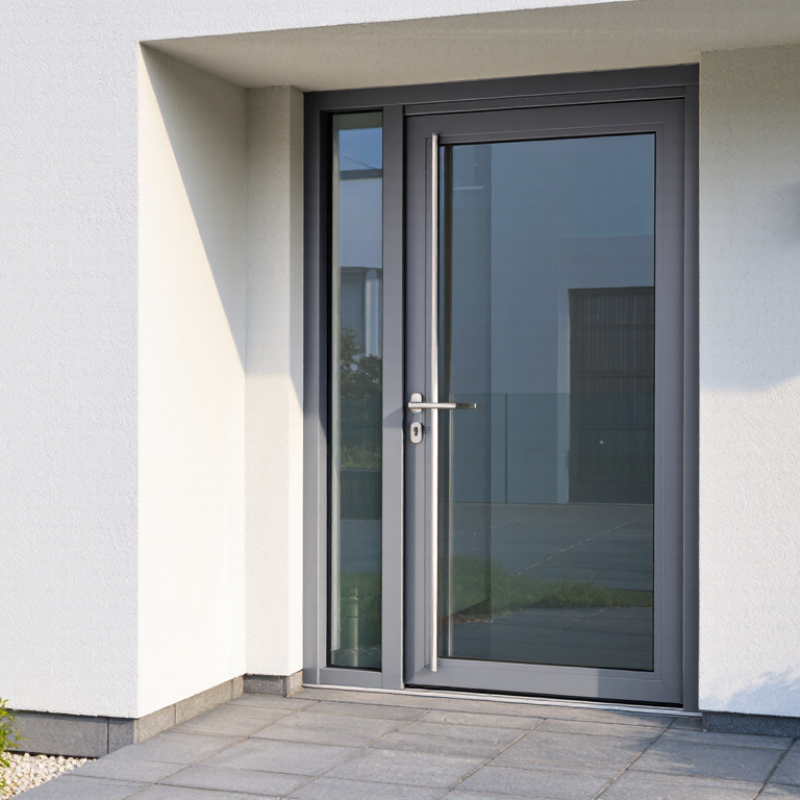
What Is an Aluminum Residential Door?

Definition and Core Characteristics of an Aluminum Residential Door

An aluminum residential door is an exterior entry or patio door built around aluminum frame members, often made from hollow extruded profiles. These profiles create a rigid structure without the bulk of many solid materials. The frame can hold glass panels, hinges, locks, and weather seals. At the threshold, even a small gap can admit drafts or rain.

Aluminum conducts heat readily, so a basic frame may transfer outdoor temperatures indoors. A thermal break—a less conductive strip between the frame’s inner and outer sections—helps limit that transfer. Glazing, seals, and installation matter too; the metal alone does not determine comfort or energy performance. The U.S. Department of Energy estimates that windows account for about 25–30% of residential heating and cooling energy use. That figure is for windows, not doors, but it highlights why glazed door assemblies deserve careful attention.

Durability is another defining feature. Aluminum resists rust, and finished surfaces can handle repeated exposure to sun and rain, though scratches or poor drainage still need attention. The Aluminum Association reports that recycling aluminum uses about 95% less energy than producing primary aluminum. That is a material-level figure, not a guarantee that every door is recycled. Small distinction. Ask about frame construction, thermal breaks, glazing, seals, and verified performance ratings when comparing door systems.

Materials and Construction of Aluminum Residential Doors

What Is an Aluminum Residential Door?

Materials and Construction of Aluminum Residential Doors

An aluminum residential door usually combines an extruded frame with a glazed or insulated panel. The frame’s strength allows relatively slim profiles, leaving more room for glass without making the door feel bulky. Many designs use a thermal break: a low-conductivity strip separates the interior and exterior aluminum. Without it, heat can travel readily through the frame. Not every model includes one. Ask about the frame section, panel core, and weather seals, not just the finish. Small gaps near a threshold can matter on a windy evening.

Construction details shape durability and comfort. Aluminum resists rust, but coatings can scratch, and hardware still needs care. The U.S. Department of Energy recommends checking a door’s rated energy performance; glazing, seals, and installation all affect results. The frame alone tells only part of the story. Material recovery is another consideration: the International Aluminium Institute estimates that about 75% of all aluminum ever produced remains in use. The Aluminum Association reports that recycling aluminum can use up to 95% less energy than making primary metal. Those figures describe aluminum broadly, not every door’s lifecycle. Separating metal from glass, sealants, and hardware can also complicate recycling. Details matter here.

Common Types and Design Options

An aluminum residential door pairs a metal frame with glass, solid panels, or both. Its relatively slim profiles can leave more room for glazing and daylight. Common configurations include hinged single doors, double or French doors, and sliding doors. Each suits a different opening and traffic pattern. A sliding panel saves swing space, while hinged doors need clear room to open.

Design options shape both appearance and everyday use. Choose from narrow or wider frames, clear or obscured glass, and solid lower panels for added privacy. Frame finishes often range from neutral shades to wood-look coatings. Hardware also matters: handles, hinges, and locks should feel comfortable and match the door’s weight. Small details show.

For comfort, ask whether the frame includes a thermal break, which helps reduce heat transfer through the metal. Glazing choice, weather seals, and careful installation also affect indoor comfort and water resistance. A large glass panel may look inviting, but it can reduce privacy or increase glare in a sunny room. There is a trade-off. Compare samples in the actual space, since finish colors can look different under warm evening lights.

Performance, Benefits, and Limitations

What Is an Aluminum Residential Door?
Performance, Benefits, and Limitations

An aluminum residential door uses an aluminum frame, often paired with glass or insulated panels. Its performance depends on more than the metal. Frame design, weather seals, glazing, and installation all affect comfort and durability. A well-fitted door should open smoothly and limit drafts around the edges.

Aluminum is light for its strength, so larger door panels can feel manageable and need less bulky framing. It resists rot and does not swell like wood after ordinary moisture exposure. Finishes can also provide a clean, consistent appearance. That matters. Still, a dark frame can feel noticeably hot in direct summer sun, and surface temperatures vary with exposure.

Heat transfer is a real limitation because aluminum conducts heat readily. A thermally broken frame, which separates inner and outer metal sections with an insulating barrier, can reduce this effect. Even so, poor seals may leave a chilly strip near the threshold. Glass choice matters too. In a quiet room, you may notice sound passing through the glazing before the frame. Coastal air, scratches, and neglected hardware can also affect long-term appearance or operation. Aluminum is not maintenance-free. Check seals and moving parts periodically, and judge a door by its tested performance and installation, not material alone.

What Is an Aluminum Residential Door? - Performance, Benefits, and Limitations

Dimension Typical Performance or Construction Benefits Limitations and Selection Notes
Definition A residential door made with an aluminum frame and, depending on the design, an aluminum panel, glass, or a combination of materials. Offers a contemporary appearance and can be made in a wide range of sizes, finishes, and glazed configurations. Performance depends on the complete door assembly, including the frame, panel, glazing, seals, hardware, and installation.
Structural strength Aluminum profiles can provide a strong, rigid frame with relatively slim sightlines. Profile design and reinforcement vary by product. Supports large glazed areas and helps maintain a stable frame when appropriately engineered. Check the product’s tested size limits and suitability for local wind and exposure conditions; strength is not determined by material alone.
Thermal insulation Unbroken aluminum conducts heat readily. Many exterior doors use a thermal break—a low-conductivity section separating interior and exterior frame surfaces. Thermally broken frames can reduce heat transfer compared with non-thermally broken aluminum frames. Even with a thermal break, results vary with glazing, panel construction, seals, and door size. Compare whole-door U-factor ratings where available.
Air and water control Weather performance relies on perimeter seals, thresholds, drainage details, glazing seals, and accurate installation. A well-designed and correctly installed assembly can help limit drafts and water entry. Ask for tested air-leakage and water-penetration results for the specific model. Site exposure and installation quality affect real-world performance.
Durability and corrosion Aluminum does not rust like iron or steel, and factory-applied coatings can protect and color the surface. Suitable finishes can provide durable everyday protection with routine cleaning. Coastal salt, pollutants, scratches, and incompatible metals can affect finishes or hardware. Follow the manufacturer’s cleaning and maintenance instructions.
Maintenance Typically requires periodic cleaning and inspection of seals, drainage openings, finishes, and moving hardware. Does not require the same regular painting schedule as many unfinished wood doors. Moving parts and weather seals still need care and eventual replacement; damaged coatings should be addressed according to product guidance.
Design and glazing Available in many colors and configurations, including doors with extensive glazing. Glass may be clear, tinted, or otherwise specified. Can bring daylight into an entry and suit modern or minimalist designs. More glass can affect privacy, solar heat gain, and energy performance. Select glazing suited to the climate, orientation, and privacy needs.
Weight and operation Aluminum frames are generally lighter than comparable steel frames, though the weight of a complete door depends on its size, panel, and glazing. Can make some large door designs practical while maintaining a relatively slim frame. Correct hinges, tracks, hardware, and installation are essential; a large or heavily glazed door may still be substantial.
Environmental considerations Aluminum is recyclable, and recycled content varies by product and supplier. Recycling can recover the material at the end of the door’s service life. Manufacturing aluminum can be energy-intensive. Environmental impact depends on recycled content, production methods, service life, and end-of-life handling.
Best suited to Projects seeking a durable, low-maintenance frame, slim sightlines, or a contemporary glazed entrance. Provides design flexibility and can offer good durability when the assembly is properly specified. For energy-sensitive applications, compare certified whole-door ratings and consider a thermally broken frame and suitable glazing.

Note: These are general material and design characteristics, not guaranteed ratings for every aluminum door. Verify current product documentation, applicable local code requirements, and installation instructions for the specific door being considered.

Residential Uses and Basic Maintenance

What Is an Aluminum Residential Door?

Residential Uses and Basic Maintenance

An aluminum residential door has a frame and panels made partly or mainly from aluminum. Homeowners use these doors for front entries, patio openings, side entrances, and garage access. Aluminum resists rust, which can be useful in damp areas, but finishes may still corrode or wear over time. The door’s insulation depends on its design, seals, and glazing—not just its metal frame. Check those details before choosing one for a draft-prone entrance.

Care is simple, but consistency matters. Wipe the frame with mild soapy water and a soft cloth, then rinse and dry it. Avoid abrasive pads; they can scratch the finish. Clear leaves and grit from tracks, especially after windy weather. Small debris can make a sliding door harder to operate. Inspect weatherstripping for gaps, cracks, or sections that have pulled loose. Look closely at corners and around glass after heavy rain. A little movement can be normal. A new rattle or sticking latch deserves attention, though. Follow the door maker’s care instructions when available, and use only lubricants suited to its hardware. I would not force a stubborn panel; that can turn a minor adjustment into a repair.

FAQS

What is an aluminum residential door made of?

It usually has an extruded aluminum frame with glass or an insulated panel. The frame can be slim, leaving more room for glazing.

What does a thermal break do?

It places an insulating barrier between the frame’s inner and outer aluminum sections. This can reduce heat transfer. Not every door has one.

What should I check beyond the door’s finish?

Ask about the frame, panel core, weather seals, and tested energy performance. Look closely near the threshold; small gaps can invite drafts.

What are the main benefits of aluminum doors?

Aluminum is strong yet relatively light. It resists rot and does not swell like wood after ordinary moisture exposure.

Can an aluminum door feel hot or cold?

Yes. Aluminum conducts heat readily, and a dark frame can become hot in direct summer sun. A thermal break may help, but seals matter too.

Are aluminum doors maintenance-free?

No. Coatings can scratch, and hardware needs occasional care. Check seals and moving parts periodically. It is easy to forget.

Does the glass affect comfort and noise?

Yes. Glazing, seals, and installation all affect performance. In a quiet room, sound may pass through the glass before the frame.

Can an aluminum door be recycled?

Aluminum is widely recoverable, but a door also contains glass, sealants, and hardware. Separating these materials can be difficult. I might focus too much on the frame alone.

Conclusion

An Aluminum Residential Door is an entry or interior door designed for homes, with a frame and often a door panel made partly or primarily from aluminum. Its construction may combine aluminum profiles with glass, insulated panels, or other materials to balance strength, appearance, and thermal performance. Available options include hinged, sliding, and folding styles, with choices in glazing, finishes, colors, and decorative details to suit different spaces and architectural preferences.

These doors are valued for their light weight, resistance to rust, and relatively low maintenance needs. Depending on their design and installation, they can also provide useful weather protection, security, and energy efficiency. However, performance varies with the quality of the frame, seals, glazing, and hardware, and aluminum can transfer heat unless thermal breaks or suitable insulation are incorporated. Common residential uses include front and patio entrances, balconies, and connections between indoor and outdoor living areas. Basic care involves cleaning the surfaces, checking seals and moving parts, and promptly addressing signs of wear.

Aria

Aria

Aria is a dedicated marketing professional with a deep passion for innovative strategies and a keen understanding of our company's product offerings. With a wealth of experience in the industry, Aria excels at crafting engaging content that highlights the unique features and benefits of our......