An Aluminum Front Door can shape a building’s first impression, security, comfort, and long-term maintenance. Global buyers now compare more than appearance. They examine thermal breaks, corrosion resistance, drainage design, glazing, hardware, and verified performance reports. As building-envelope consultant Dr. Andrew K. Peterson explains, “A front door performs well when it survives real weather and daily use without demanding constant attention.” That practical view matters in coastal cities, humid regions, cold climates, and areas with intense sunlight.
This guide explores ten useful types: minimalist flush doors, slim-frame glass doors, pivot doors, double-entry doors, arched designs, wood-look finishes, louvered doors, oversized statement doors, smart-access doors, and fully custom systems. Each option has a different balance of style, weight, insulation, ventilation, and installation difficulty. A pivot door may look impressive, yet its hinges and floor drainage require careful planning. A wood-look finish can feel warm, but poor coating quality may fade under strong ultraviolet exposure. No ranking is perfect. Buyer priorities change by climate, budget, building use, and local installation skill.
Reliable sourcing requires more than attractive product photos. Ask manufacturers for alloy details, coating specifications, test results, warranty terms, replacement-part support, and maintenance instructions. Check whether the frame includes a genuine thermal break. Confirm that locks, seals, glass, and thresholds match the project’s security and weather needs. Small omissions can become expensive problems. The best Aluminum Front Door is not always the heaviest or most expensive model. It is the one that fits the building, climate, users, and installer’s capabilities honestly.
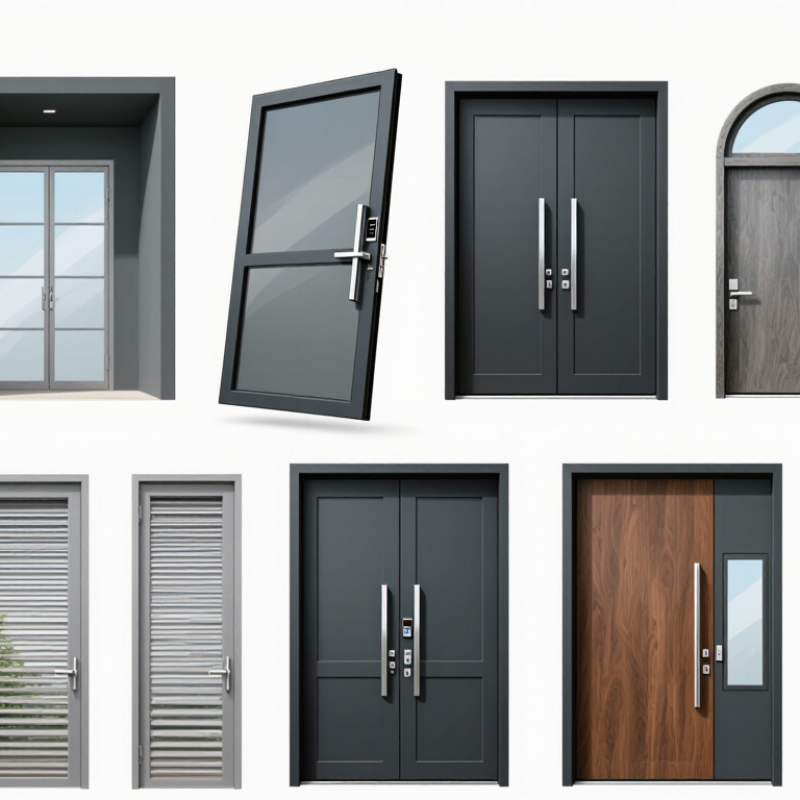
Aluminum front doors are not classified by appearance alone. Global buyers usually compare opening method, panel layout, thermal design, glazing, and security performance. The ten common types include single-leaf, double-leaf, pivot, sliding, bi-fold, lift-and-slide, fully glazed, panelled, thermally broken, and security-rated doors. These categories can overlap. A thermally broken pivot door is still a pivot door.
Opening style affects circulation and installation space. Single-leaf doors suit compact entrances, while double-leaf systems serve wider commercial openings. Pivot doors create a strong visual effect but need accurate floor and head clearances. Sliding and lift-and-slide doors reduce swing space, although their rollers and tracks require careful maintenance. Bi-fold doors provide broad openings, but wind exposure may affect alignment. Fully glazed doors increase daylight, while panelled designs offer more privacy and impact resistance.
Thermal classification deserves attention. The UNEP Global Status Report for Buildings and Construction reported that buildings used about 30% of global final energy in 2022. Door selection therefore influences the envelope, especially in conditioned buildings. Buyers should check U-value, air leakage, water resistance, and solar control under the applicable regional standard. Thermally broken frames usually perform better than basic aluminum frames, but glass and installation can weaken the result. A low U-value alone proves little. Security-rated doors should also show tested resistance, hardware performance, and anchoring details. This classification framework is practical, yet imperfect; climate, wall construction, and local testing methods can change the final choice.
| No. | Aluminum Front Door Type | Basic Opening Configuration | Typical Glazing Arrangement | Common Thermal Construction | Space and Installation Needs | Typical Applications | Main Advantages | Key Buying Considerations | Maintenance Level |
|---|---|---|---|---|---|---|---|---|---|
| 1 | Single Hinged Aluminum Door | One door leaf opens inward or outward on side hinges; the most common front-door format. | Solid panel, partial glazing, or full-height insulated glass unit. | Thermally broken aluminum frame with insulated panel or double- or triple-glazed unit. | Requires clear swing space equal to the door leaf width; suitable for standard wall openings. | Detached houses, apartments, offices, and low-rise commercial entrances. | Simple operation, broad design range, straightforward replacement, and easy hardware selection. | Check handing, rough-opening dimensions, threshold height, weather seals, and local wind-load requirements. | Low |
| 2 | Double Hinged Aluminum Door | Two hinged leaves, usually with one active leaf and one secondary leaf. | Matching glazing or panels in both leaves; decorative center bars may be included. | Thermally broken profiles with insulated glazing or insulated door panels. | Needs a wider structural opening and sufficient clearance for two swinging leaves. | Large residential entrances, villas, hotels, and representative commercial buildings. | Wide access, balanced appearance, and convenient movement of large furniture or equipment. | Confirm active-leaf width, astragal design, weatherproofing at the meeting stile, and hinge capacity. | Low to Medium |
| 3 | Aluminum Pivot Front Door | Door leaf rotates around vertical pivot points positioned near the edge or farther toward the center. | Large glass areas, flush panels, or mixed glass-and-panel designs. | Insulated aluminum door construction with reinforced pivot hardware and weather seals. | Requires a level threshold, accurate structural support, and clear floor area on both sides. | Modern luxury residences, galleries, hospitality projects, and architectural entrances. | Wide visual opening, distinctive appearance, and the ability to accommodate oversized door leaves. | Verify maximum leaf size and mass, pivot load rating, drainage, alignment tolerances, and accessibility requirements. | Medium |
| 4 | Aluminum Sliding Front Door | One or more panels move horizontally along tracks instead of swinging into the room. | Usually large insulated glass panels; solid or partially glazed options are also available. | Thermally broken sliding profiles with double- or triple-glazed insulated glass. | Needs a suitable side pocket or overlapping panel zone; floor tracks must be installed accurately. | Homes with limited swing space, entrances opening to patios, and contemporary buildings. | Saves swing space, supports broad glazed openings, and provides convenient indoor-outdoor access. | Inspect track drainage, roller capacity, air and water performance, panel overlap, and threshold accessibility. | Medium |
| 5 | Aluminum Folding or Bi-Fold Door | Two or more connected panels fold and stack to one or both sides of the opening. | Predominantly full-height insulated glass with narrow aluminum sightlines. | Thermally broken folding profiles with insulated glazing and multi-point seals. | Requires a wide opening, strong head support, accurate track installation, and stacking space. | Wide residential entrances, event venues, restaurants, and indoor-outdoor living spaces. | Creates a large clear opening and allows several panels to operate as one entrance system. | Confirm panel count, stacking direction, hardware durability, drainage, wind exposure, and threshold details. | Medium |
| 6 | Aluminum French Front Door | A paired hinged-door design with two equal or near-equal leaves opening from a central meeting line. | Full-height glass, divided lights, decorative bars, or insulated panels. | Thermally broken aluminum frames with insulated glazing and sealed meeting stiles. | Needs a broad opening and swing clearance; commonly installed with a fixed transom or side panels. | Traditional-style homes, renovated properties, boutique hotels, and formal entrances. | Symmetrical appearance, generous daylight, and a wider passage when both leaves are opened. | Check central seal design, inactive-leaf bolts, handle position, threshold performance, and door coordination. | Low to Medium |
| 7 | Aluminum Door with Sidelights | A main hinged or pivot door is combined with one or two fixed narrow glass panels at the sides. | Clear, tinted, laminated, patterned, or low-emissivity insulated glass in the sidelights. | Thermally broken aluminum framing with insulated glazing and insulated door leaf. | Requires a wider wall opening and careful structural support around multiple glazed sections. | Residential foyers, office receptions, hotels, and entrances requiring additional daylight. | Improves natural light and visual width without requiring a fully operable multi-panel system. | Specify safety glazing, privacy level, mullion width, fixed-panel sealing, and structural opening dimensions. | Low |
| 8 | Aluminum Door with Transom | A main door is installed below a fixed horizontal panel, known as a transom. | Transom may use clear, frosted, decorative, laminated, or insulated glass. | Thermally broken frame with insulated glazing and a sealed insulated door leaf. | Requires additional height above the door and suitable lintel or header support. | High-ceiling residences, historic-style renovations, offices, and hospitality entrances. | Adds daylight and architectural height while retaining a conventional door operation. | Confirm overall height, glass safety classification, thermal continuity, condensation control, and cleaning access. | Low |
| 9 | Aluminum Flush Panel Front Door | A hinged or pivot door with a smooth, largely uninterrupted exterior face. | Generally solid; optional narrow vision panel or concealed glazing may be incorporated. | Insulated aluminum or aluminum-clad panel with a low-conductivity core and thermal break. | Fits standard or custom openings and usually needs less cleaning than highly glazed designs. | Minimalist homes, secure entrances, apartment buildings, and projects prioritizing privacy. | Clean modern appearance, strong privacy, reduced direct solar gain, and fewer visible components. | Check panel impact resistance, finish durability, concealed drainage, hardware access, and color consistency. | Low |
| 10 | Aluminum Security Front Door | Usually a reinforced hinged or pivot door designed around enhanced locking and impact-resistance features. | Solid insulated panel, laminated security glass, or limited glazing protected by reinforced framing. | Thermally broken reinforced profiles with multi-point locking and heavy-duty hinges. | Requires a stable subframe, accurate anchoring, and installation according to the tested door assembly. | Urban residences, apartments, public buildings, and locations with elevated security requirements. | Supports stronger resistance to forced entry when the complete tested assembly is correctly installed. | Request independently verified performance for the target market, including locks, glazing, hinges, frame, and installation. | Medium |
Common types include single-leaf, double-leaf, pivot, sliding, bi-fold, and lift-and-slide doors. Fully glazed, panelled, thermally broken, and security-rated designs also exist. Categories can overlap.
It suits most homes and compact commercial entrances. A leaf around 900 to 1,100 millimeters wide often feels comfortable. Check hinges, weather seals, and frame depth.
Double-leaf doors create wider openings for offices, hotels, villas, and busy entrances. One leaf can handle daily traffic. The second leaf helps move furniture or equipment.
Pivot doors need accurate floor and head clearances. They create a strong visual effect. Installation errors may cause rubbing, poor sealing, or difficult movement.
Yes. They reduce the swing area needed inside and outside. Tracks and rollers need regular cleaning and careful maintenance. Small debris can affect movement.
Low-emissivity insulated glass can improve comfort. Laminated glass helps retain fragments after breakage. Tempered glass resists impact but breaks into small pieces. Glass choice depends on climate, risk, and local requirements.
Thermal breaks usually reduce heat transfer through the frame. Buyers should also check U-value, air leakage, water resistance, and glass performance. A low U-value alone proves little.
Check frame depth, corner joints, hinge protection, locking hardware, and anchoring details. Independent test results matter more than attractive handles. The door may look strong, but installation can weaken it.
Powder coating offers many colors, while anodizing keeps a metallic appearance. Coastal projects need suitable pretreatment and corrosion testing. Salt air is unforgiving.
Do not compare appearance alone. Confirm wall structure, opening dimensions, wind exposure, glazing, maintenance, and local requirements. Wider is not automatically better. A polished brochure cannot replace test documents.
Choosing the right Aluminum Front Door begins with understanding how different systems meet the needs of global buyers. Common classifications include single-leaf and double-leaf entry doors, each suited to different entrance widths, traffic levels, and architectural styles. Sliding, folding, and pivot designs offer alternative solutions for modern homes and commercial buildings, especially where space, visual impact, or wide openings are important.
Performance is another key consideration. Thermal-break and insulated aluminum door systems can improve energy efficiency, indoor comfort, and resistance to temperature changes. Buyers should also evaluate security features, glazing options, surface finishes, hardware compatibility, and maintenance requirements. Regional climate, building standards, installation conditions, and local design preferences may influence the final choice. By comparing structure, operation, insulation, appearance, and security together, purchasers can select an Aluminum Front Door that balances durability, functionality, and long-term value for its intended market.

 Fortisdor